My book On His Own Side of the Puck was mentioned in the Marek vs. Wyshynski podcast on June 16. You can listen to the bit in question here. Jeff Marek is a SIHR member and seems to enjoy the book, specifically mentioning the preface, which I agree is probably the best part of the book.
The mention has led to a few people asking me whether I have an ebook edition available. I had previously offered an ebook on Blurb, however I was not happy with how the conversion turned out there so I no longer offer it for sale. I am currently looking at Createspace/Amazon as a means to create a Kindle version, which is also readable on an iPad with the appropriate app. I will let y'all know when this is ready to go.
Wednesday, 18 June 2014


Monday, 2 June 2014
On the Origin of Organized Hockey
My last post was a review of the new book On the Origin of Hockey, which presents a great deal of new evidence about early ice hockey, especially as it was played in England. One of the conclusions you can draw from the book is that giving special status to the first recorded, organized hockey game in Canada (played in Montreal on March 3, 1875) does not make sense, given that there are earlier games played in England that were just as organized and just as much hockey as that one. That is, if the first Montreal game is an example of organized hockey, then there are several earlier matches in England that should be considered organized hockey as well. So I thought I'd take you through the process, to show that this conclusion is well-founded.
We start with the definition of hockey in general, which we take from the Society for International Hockey Research's (SIHR) Report of the Sub-Committee Looking into Claim that Windsor, Nova Scotia, is the Birthplace of Hockey. In 2002 this report concluded that all a game needs to be considered (ice) hockey is that it is played on an ice rink by two opposing teams of skaters who use curved sticks to try to drive a small propellant into or through opposite goals.
This definition was arrived at because the committee writing the report needed terms of reference to determine when something is hockey and when it is not. The committee correctly concluded that there is no compelling evidence to conclude that Windsor is the birthplace of hockey. The primary point presented by proponents of the Windsor claim, for example, was from a work of fiction wherein one fictional character is imagining what the youth of another fictional character might have been like. It is thoroughly unconvincing and is rightly dismissed as evidence that hockey was played at a particular time in a particular place. So in fact the definition of hockey was not really needed, due to the nature of the evidence being examined.
However, the committee did engage in a bit of digression about the first recorded hockey match played in Montreal, which was on March 3, 1875. This might have been relevant had the Windsor claim suggested that hockey began in Nova Scotia later than 1875, in which case the Montreal game would have been evidence against that. But that's not the case, so it seems the committee might have been suggesting that Montreal should be considered the birthplace of hockey, though they explicitly state that is not the intent.
The committee noted that the Montreal game seems to mark the transition of hockey from a pastime to a dedicated sporting endeavour: "The March 3 event, structured as it was, invites a distinction between formal and informal hockey..." This raises the question, of course, of what the committee saw in this match that is not present in earlier reports of hockey. They explained:
"The match appears to be unique. It is the earliest eyewitness account known, at least to this SIHR committee, of a specific game of hockey in a specific place at a specific time, and with a recorded score, between two identified teams."
So the purpose of discussing the Montreal game actually seems to have been to put it forward as the birthplace of formal, or organized, hockey rather than hockey in general. Based on newspaper reports, we know the following details about this first hockey match in Montreal: that it was played at the Victoria Skating Rink in Montreal on March 3, 1875 between two teams of nine men each (the names of which were recorded); that there was a captain for each team; that they used a flat, circular piece of wood instead of a ball; that they tried to drive said object through the opposing goal; that there were spectators; and that captain Creighton's team defeated captain Torrance's team by two goals to nil (but we do not know who scored the goals). Both teams were selected from members of the Victoria Skating Club.
If we combine the criteria for formality with the earlier criteria for hockey presented by the committee, we can derive the committee's implicit definition of formal hockey. Formal hockey would have the following characteristics:
On the Origin of Hockey produces several candidate games, that may be considered "organized hockey" using these criteria. Great credit must be given to the authors Carl Giden, Patrick Houda and Jean-Patrice Martel for unearthing and presenting the reports of these games. Let's examine a few.
Moor Park, Hertfordshire - February 2, 1871
I mentioned this match in the review. We know it was hockey, we know the teams, we know the score, we even know the lineups and the goal-scorers. We know about as much about this match as we do the first Montreal game. Specific reference is made to the ice, and the fact that it is called hockey necessarily entails sticks and a propellant, since all descriptions of hockey from that time period and before involve such things. The goals are also specifically mentioned, and the two seven-man teams are listed. A brief goal-by-goal account is provided, and a 10-minute intermission is also mentioned. Unfortunately it does not specifically refer to skates, so in theory someone could object to it on that basis. In the book, the authors present a convincing argument that the skates are implicit, however we do have to recognize that they are not specifically mentioned. Moreover, skates were also not specifically mentioned in the reports of the March 3, 1875 game in Montreal, so if the lack of a specific mention is a problem for Moor Park, then it's a problem for Montreal as well.
Elsham, Lincolnshire - January 6, 1871
On this date, two eight-man teams played to a draw after nearly 90 minutes of hockey. The two identified sides were Elsham and Brigg, and the newspaper reports make it clear that this match involved an ice rink, players wearing skates, using sticks and trying to drive an object through opposite goals. We know that the game was planned ahead of time (Colonel Astley had invited the men from Brigg to come play a match), and was played in a particular place at a particular time. We do not know the precise score, but we do know for certain that a score was kept because the match was declared a draw. All of the implicit criteria for formal hockey seem to be represented in this game.
In fact, these two teams later played a rematch, so it's clear that having a decision on the score was important to the players involved. The second match was played on February 4, 1871 and this time Elsham walked over Brigg by a score of eight to nil. Brigg surrendered 15 minutes before time was up, so we know that there was a specific time that was to be allowed for the game. The ice was said to be in excellent condition for the game.
Bluntisham-cum-Earith, Huntingdonshire - January 4, 1871
This was a big week for early organized hockey, with matches only two days apart, though over 150 kilometres in distance from each other. In this case the teams were 20-a-side, one representing Bluntisham & Earith (the "Bury Fen team") and the other from Over & Swavesey. The former side scored a victory two goals to nil. Once again all of the criteria for formal hockey as indicated by SIHR seem to be met in this match. We even know the names of the team captains.
Spetchley, Worcestershire - December 28, 1870
This is the second match mentioned in the review, and similar to the first we know the (10-man) teams, the score, the lineups and the goal-scorers. In one of the reports describing the game, it is under the heading "skating" so in this case (unlike Moor Park above), we know for certain that there were skates involved.
So the winter of 1870/71 was a busy time for early organized hockey in England. Unfortunately for the sporting fans of that country, it did not seem to really catch on, at least not the way it did in Canada some few years later. But there is an even older candidate for the earliest known game of organized ice hockey, over 13 years before this busy winter.
Swavesey, Cambridgeshire - February 5, 1857
On this date, teams from Over and Swavesey met in a match of "bandy", almost 24 years before they would band together to play against Bluntisham & Earith as noted above. At this time, of course, there is no way to differentiate between hockey and bandy when played on the ice, since the rules of each that would allow us to tell them apart had not been standardized yet. Bandy was simply a form of hockey, as the authors of the book argue in some detail. All of the criteria appear to be met in this game as well. Swavesey won the match, though the exact score was not reported. So this is not quite as good an example as some of the 1870/71 matches, but it is worth considering.
Conclusion
Not all of these games are precise matches for the apparent SIHR criteria to be considered organized hockey. But it is abundantly clear that the level of organization of the Montreal match of March 3, 1875 was not unique for its time. There were formal games of ice hockey played in England at least four years before that time, and perhaps as much as 18 years before.
What is unique about Montreal is what happened in the years after that first game, as the sport slowly grew in popularity, and interest really began to take off with the first Montreal Winter Carnival tournament in 1883. But assigning special value to the 1875 game is not supportable, given that we now have evidence of a number of very similar matches played previously in England. Canada certainly made hockey into the great winter game, but it was built upon a foundation that first arrived from England.
We start with the definition of hockey in general, which we take from the Society for International Hockey Research's (SIHR) Report of the Sub-Committee Looking into Claim that Windsor, Nova Scotia, is the Birthplace of Hockey. In 2002 this report concluded that all a game needs to be considered (ice) hockey is that it is played on an ice rink by two opposing teams of skaters who use curved sticks to try to drive a small propellant into or through opposite goals.
This definition was arrived at because the committee writing the report needed terms of reference to determine when something is hockey and when it is not. The committee correctly concluded that there is no compelling evidence to conclude that Windsor is the birthplace of hockey. The primary point presented by proponents of the Windsor claim, for example, was from a work of fiction wherein one fictional character is imagining what the youth of another fictional character might have been like. It is thoroughly unconvincing and is rightly dismissed as evidence that hockey was played at a particular time in a particular place. So in fact the definition of hockey was not really needed, due to the nature of the evidence being examined.
However, the committee did engage in a bit of digression about the first recorded hockey match played in Montreal, which was on March 3, 1875. This might have been relevant had the Windsor claim suggested that hockey began in Nova Scotia later than 1875, in which case the Montreal game would have been evidence against that. But that's not the case, so it seems the committee might have been suggesting that Montreal should be considered the birthplace of hockey, though they explicitly state that is not the intent.
The committee noted that the Montreal game seems to mark the transition of hockey from a pastime to a dedicated sporting endeavour: "The March 3 event, structured as it was, invites a distinction between formal and informal hockey..." This raises the question, of course, of what the committee saw in this match that is not present in earlier reports of hockey. They explained:
"The match appears to be unique. It is the earliest eyewitness account known, at least to this SIHR committee, of a specific game of hockey in a specific place at a specific time, and with a recorded score, between two identified teams."
So the purpose of discussing the Montreal game actually seems to have been to put it forward as the birthplace of formal, or organized, hockey rather than hockey in general. Based on newspaper reports, we know the following details about this first hockey match in Montreal: that it was played at the Victoria Skating Rink in Montreal on March 3, 1875 between two teams of nine men each (the names of which were recorded); that there was a captain for each team; that they used a flat, circular piece of wood instead of a ball; that they tried to drive said object through the opposing goal; that there were spectators; and that captain Creighton's team defeated captain Torrance's team by two goals to nil (but we do not know who scored the goals). Both teams were selected from members of the Victoria Skating Club.
If we combine the criteria for formality with the earlier criteria for hockey presented by the committee, we can derive the committee's implicit definition of formal hockey. Formal hockey would have the following characteristics:
- ice rink
- players wearing skates
- players using curved sticks
- trying to drive a small propellant
- opposite goals
- game played in a specific place at a specific time
- recorded score
- two identified, opposing teams
On the Origin of Hockey produces several candidate games, that may be considered "organized hockey" using these criteria. Great credit must be given to the authors Carl Giden, Patrick Houda and Jean-Patrice Martel for unearthing and presenting the reports of these games. Let's examine a few.
Moor Park, Hertfordshire - February 2, 1871
I mentioned this match in the review. We know it was hockey, we know the teams, we know the score, we even know the lineups and the goal-scorers. We know about as much about this match as we do the first Montreal game. Specific reference is made to the ice, and the fact that it is called hockey necessarily entails sticks and a propellant, since all descriptions of hockey from that time period and before involve such things. The goals are also specifically mentioned, and the two seven-man teams are listed. A brief goal-by-goal account is provided, and a 10-minute intermission is also mentioned. Unfortunately it does not specifically refer to skates, so in theory someone could object to it on that basis. In the book, the authors present a convincing argument that the skates are implicit, however we do have to recognize that they are not specifically mentioned. Moreover, skates were also not specifically mentioned in the reports of the March 3, 1875 game in Montreal, so if the lack of a specific mention is a problem for Moor Park, then it's a problem for Montreal as well.
Elsham, Lincolnshire - January 6, 1871
On this date, two eight-man teams played to a draw after nearly 90 minutes of hockey. The two identified sides were Elsham and Brigg, and the newspaper reports make it clear that this match involved an ice rink, players wearing skates, using sticks and trying to drive an object through opposite goals. We know that the game was planned ahead of time (Colonel Astley had invited the men from Brigg to come play a match), and was played in a particular place at a particular time. We do not know the precise score, but we do know for certain that a score was kept because the match was declared a draw. All of the implicit criteria for formal hockey seem to be represented in this game.
In fact, these two teams later played a rematch, so it's clear that having a decision on the score was important to the players involved. The second match was played on February 4, 1871 and this time Elsham walked over Brigg by a score of eight to nil. Brigg surrendered 15 minutes before time was up, so we know that there was a specific time that was to be allowed for the game. The ice was said to be in excellent condition for the game.
Bluntisham-cum-Earith, Huntingdonshire - January 4, 1871
This was a big week for early organized hockey, with matches only two days apart, though over 150 kilometres in distance from each other. In this case the teams were 20-a-side, one representing Bluntisham & Earith (the "Bury Fen team") and the other from Over & Swavesey. The former side scored a victory two goals to nil. Once again all of the criteria for formal hockey as indicated by SIHR seem to be met in this match. We even know the names of the team captains.
Spetchley, Worcestershire - December 28, 1870
This is the second match mentioned in the review, and similar to the first we know the (10-man) teams, the score, the lineups and the goal-scorers. In one of the reports describing the game, it is under the heading "skating" so in this case (unlike Moor Park above), we know for certain that there were skates involved.
So the winter of 1870/71 was a busy time for early organized hockey in England. Unfortunately for the sporting fans of that country, it did not seem to really catch on, at least not the way it did in Canada some few years later. But there is an even older candidate for the earliest known game of organized ice hockey, over 13 years before this busy winter.
Swavesey, Cambridgeshire - February 5, 1857
On this date, teams from Over and Swavesey met in a match of "bandy", almost 24 years before they would band together to play against Bluntisham & Earith as noted above. At this time, of course, there is no way to differentiate between hockey and bandy when played on the ice, since the rules of each that would allow us to tell them apart had not been standardized yet. Bandy was simply a form of hockey, as the authors of the book argue in some detail. All of the criteria appear to be met in this game as well. Swavesey won the match, though the exact score was not reported. So this is not quite as good an example as some of the 1870/71 matches, but it is worth considering.
Conclusion
Not all of these games are precise matches for the apparent SIHR criteria to be considered organized hockey. But it is abundantly clear that the level of organization of the Montreal match of March 3, 1875 was not unique for its time. There were formal games of ice hockey played in England at least four years before that time, and perhaps as much as 18 years before.
What is unique about Montreal is what happened in the years after that first game, as the sport slowly grew in popularity, and interest really began to take off with the first Montreal Winter Carnival tournament in 1883. But assigning special value to the 1875 game is not supportable, given that we now have evidence of a number of very similar matches played previously in England. Canada certainly made hockey into the great winter game, but it was built upon a foundation that first arrived from England.
Wednesday, 28 May 2014
The Voyage of the Puck, or the Ascent of Hockey
Full disclosure: I consider the authors of On the Origin of Hockey to be colleagues, and at least one of them to be a friend. I
received my copy of the book at no charge, however this was simply as
a result of attending the 2014 Annual General Meeting of the Society
for International Hockey Research; everyone there was given a copy.
Furthermore, the authors make at least one very complimentary
reference to my own book in their work. I suppose you could use all
of that to discount my opinion of their work entirely. All I can do is assure you
that the identity of the authors did not affect my reaction to this
book. Besides, there are already so many valid reasons to discount my opinion
entirely that you really don't need to go making another one up, now do you?
A review of On the Origin of Hockey
You may have seen some of the many headlines in response to the new book On the Origin of Hockey, which was launched this past weekend, declaring that “Hockey is actually an English game!” or words to that effect. The book is purported to prove that hockey, the game so long considered to be a Canadian one, was really born in England. Is this true? Have the Canadian origins of the great winter game been completely refuted?
The short answer is no, not really. But fortunately for the authors (Carl Giden, Patrick Houda and Jean-Patrice Martel, or GHM for short), that's not what they claim to prove. They are clear that the transition from the early forms of hockey to the modern version was given impetus and took place in Canada, and without the Canadian influence the sport would not be the great one that we have today. If we look at the very last paragraph in the book, for instance, we see that GHM have no interest in declaring hockey anything other than Canadian:
In order to reach such a conclusion, GHM rely on a definition of hockey developed by the Society for International Hockey Research (SIHR) in their 2002 Report of the Sub-Committee Looking into Claim that Windsor, Nova Scotia, is the Birthplace of Hockey. This definition consists of only six points: ice surface, two contesting teams, players on skates, use of curved sticks, small propellant (a ball or puck), objective of scoring on opposite goals. (p. 31) The authors clearly demonstrate that, using this definition of hockey, the game was played in England before it was played in Canada.They also forcefully demonstrate that based on this definition, early bandy is not merely a "hockey-like game", it is in fact hockey. If one wishes to call bandy a hockey-like game, one must call the first Montreal game in 1875 a hockey-like game as well.
This is not the first work to suggest that early forms of hockey originated in Britain, ultimately. However, the general consensus has long been that “organized” hockey had its beginnings in Montreal. This is the attitude presented in the SIHR report, which went beyond its mandate of examining the Windsor claim, and put forward Montreal as the birthplace of organized hockey. This is because an organized hockey match was played in Montreal on March 3, 1875, and it is the first recorded game of its kind. Or at least, it was the earliest known recorded match at the time the SIHR report was written.
GHM present volumes of evidence that has been uncovered in the years since the SIHR report was published. For example, the authors discuss a game of hockey that was played on December 27, 1870 in Spetchley, Worcestershire and that was reported in two newspapers. Two 10-man teams played in this match, one representing Worcester and the other, Spetchley. The latter club took the match by a score of 4-3, and we even know the identities of the goal-scorers (Tyler, Yeates and A. Everill for Worcester; Tayler, Wheeler, Dale and Francisco for Spetchley [p. 74]), which is information we are missing for the first Montreal game. As GHM point out, you may be able to develop a definition of organized hockey that would exclude this game but include the first Montreal match, however such a definition would have to be arbitrary and designed specifically to exclude the former. Such a definition would be unreasonable, since this 1870 game has far, far more in common with the 1875 Montreal game than the latter has in common with a 2014 NHL game (for example). It would therefore be silly to group the latter two together while keeping the former two separate.
In fact the authors take to task the very phrase "hockey as we know it today", since it is so often used to justify this division. Hockey before the first Montreal game was not hockey as we know it today, therefore it can be dismissed from being "true" ice hockey. But as GHM point out, the hockey played in Montreal in 1875 is also not "hockey as we know it today", so the argument has no basis. They list a number of examples of offenders in this regard, including me. So I will take this opportunity to retract my comment, with the explanation that it was more a case of lazy writing than actually making the offending argument. I intended to refer to the set of hockey games that can be shown to have evolved directly from the first Montreal game, not to suggest that the first Montreal game was indeed hockey as we know it today.
Astute readers may also notice that the definition or organized hockey that I used in On His Own Side of the Puck may appear to be just such an arbitrary definition, designed to exclude pre-Montreal hockey from consideration. To that I will say that my purpose in writing that definition is very narrow, and it is not intended for general use in the hockey origins discussion. In fact, I was never entirely happy with using the term "organized hockey" for it, but I was short on options. I was trying to describe the set of hockey games that can be shown to have evolved directly from the first Montreal game. I could have used "organized Montreal hockey", I suppose, but its later growth far beyond the borders of that city would make such a term problematic. A more precise term would be "the version of organized hockey that was first played in Montreal in 1875, and all subsequent versions of hockey that can be demonstrated to have developed directly from that version", but I think you'll agree that's more than a bit unwieldy. Ultimately my point is that nothing in GHM's work contradicts my own; they are looking at the entire spiderweb, while I was looking at only a single strand.
There was at least one other recorded game of organized hockey played in England before 1875. On February 2, 1871, the Moor Park team defeated an Oxford side by a score of 5-2. We again know the identities of the goal scorers, and Moor Park's Algernon Grosvenor (a noted sportsman in his lifetime) scored three of them (p. 72), making him the scorer of the first recorded ice hockey hat trick, contrary to what you've previously read here at Hockey Historysis (sorry, Mr. Geddes, that honour no longer belongs to you.)
These are just a few examples of the many astounding bits of evidence that GHM present to support their conclusions. As a researcher myself, the amount of information that these three historians have accumulated from a wide variety of sources is mind-boggling. The result is that there is nothing we can say about early ice hockey that has been shown to have happened in Canada that the authors cannot show happened in England even earlier, and that's the crux of the argument. If you must point at a place to be called ice hockey's birthplace, it would be England (based on the evidence currently available to us). The cradle, however, would be Canada, and that's where the game grew and matured to its heights.
If you are at all interested in the early years of hockey history, and in the development of the game, you absolutely need this book. If, however, you are more interested in holding on to cherished existing ideas about where hockey came from, then you should probably skip it (although I would encourage you to have more intellectual curiosity than that). But if you're looking for facts, this volume cannot be impugned, and it is perhaps the single most important contribution to the study of this aspect of hockey history that has ever been published. And I don't think I am exaggerating that point.
A review of On the Origin of Hockey
You may have seen some of the many headlines in response to the new book On the Origin of Hockey, which was launched this past weekend, declaring that “Hockey is actually an English game!” or words to that effect. The book is purported to prove that hockey, the game so long considered to be a Canadian one, was really born in England. Is this true? Have the Canadian origins of the great winter game been completely refuted?
The short answer is no, not really. But fortunately for the authors (Carl Giden, Patrick Houda and Jean-Patrice Martel, or GHM for short), that's not what they claim to prove. They are clear that the transition from the early forms of hockey to the modern version was given impetus and took place in Canada, and without the Canadian influence the sport would not be the great one that we have today. If we look at the very last paragraph in the book, for instance, we see that GHM have no interest in declaring hockey anything other than Canadian:
Today, regardless of where it is played, hockey is a truly Canadian game. That is the legacy of the first Montreal game, thanks in large part to the leadership of James Creighton, who recognized how ideally suited to Canada's climate and people the game of ice hockey was, and who masterfully gave it the impulse it needed to become the greatest winter sport that exists. (p. 267)So we apparently cannot rely on the mainstream media to provide an accurate picture of what the book it about, which is to be expected given the relatively nuanced position that the authors take. But if refuting hockey's Canadianness is not the point of the book, then what is? What conclusions do GHM actually put forth in their work? Fortunately for our purposes, they provide a concise summary of their findings in their final chapter. They are:
1. Ice hockey...was played in England for several decades before it was played in Canada.
2. There were several instances of organized hockey games played in England before the one played on March 3, 1875 in Montreal.
3. No reasonable definition of hockey could be imagined that would include all games played in Montreal since March 3, 1875, but exclude all games played in England to that date.
4. Prior to the 1890s...bandy and hockey were exactly the same activity, called by different names depending on the region.
5. The activity in which children and adults engaged on ice with skates in England in the 19th century – and even before – was not merely a variety of “stick and ball games.” It was hockey.
6. Ice hockey does not have mysterious origins. It came very naturally to English (and other British) field hockey players who took their game to the ice and put on skates when the weather provided such ice, which occurred almost every winter.None of these statements are merely asserted. Voluminous evidence and analysis is provided to lead the reader clearly to each conclusion. GHM do discuss the “birthplace of hockey” claims made about various Canadian locales, from those with almost nothing to support them (Windsor, Nova Scotia) to those with much more evidence behind them (Halifax, for example). However, the real point is that “birthplace” is an improper term to use, something that other hockey authors have argued in the past (such as Bill Fitsell in How Hockey Happened). The authors acknowledge that there is evidence that early forms of hockey were played at some of these locales in Canada, but present evidence that such hockey was played across the Atlantic before being played in Canada. Ice hockey was not first invented in Canada, but it was certainly grown and developed here. Indeed, the authors admit that they cannot say hockey was invented in England either, just that the earliest recorded evidence (which has been uncovered only recently) for hockey played on ice comes from that country.
(pp.257-259)
In order to reach such a conclusion, GHM rely on a definition of hockey developed by the Society for International Hockey Research (SIHR) in their 2002 Report of the Sub-Committee Looking into Claim that Windsor, Nova Scotia, is the Birthplace of Hockey. This definition consists of only six points: ice surface, two contesting teams, players on skates, use of curved sticks, small propellant (a ball or puck), objective of scoring on opposite goals. (p. 31) The authors clearly demonstrate that, using this definition of hockey, the game was played in England before it was played in Canada.They also forcefully demonstrate that based on this definition, early bandy is not merely a "hockey-like game", it is in fact hockey. If one wishes to call bandy a hockey-like game, one must call the first Montreal game in 1875 a hockey-like game as well.
This is not the first work to suggest that early forms of hockey originated in Britain, ultimately. However, the general consensus has long been that “organized” hockey had its beginnings in Montreal. This is the attitude presented in the SIHR report, which went beyond its mandate of examining the Windsor claim, and put forward Montreal as the birthplace of organized hockey. This is because an organized hockey match was played in Montreal on March 3, 1875, and it is the first recorded game of its kind. Or at least, it was the earliest known recorded match at the time the SIHR report was written.
GHM present volumes of evidence that has been uncovered in the years since the SIHR report was published. For example, the authors discuss a game of hockey that was played on December 27, 1870 in Spetchley, Worcestershire and that was reported in two newspapers. Two 10-man teams played in this match, one representing Worcester and the other, Spetchley. The latter club took the match by a score of 4-3, and we even know the identities of the goal-scorers (Tyler, Yeates and A. Everill for Worcester; Tayler, Wheeler, Dale and Francisco for Spetchley [p. 74]), which is information we are missing for the first Montreal game. As GHM point out, you may be able to develop a definition of organized hockey that would exclude this game but include the first Montreal match, however such a definition would have to be arbitrary and designed specifically to exclude the former. Such a definition would be unreasonable, since this 1870 game has far, far more in common with the 1875 Montreal game than the latter has in common with a 2014 NHL game (for example). It would therefore be silly to group the latter two together while keeping the former two separate.
In fact the authors take to task the very phrase "hockey as we know it today", since it is so often used to justify this division. Hockey before the first Montreal game was not hockey as we know it today, therefore it can be dismissed from being "true" ice hockey. But as GHM point out, the hockey played in Montreal in 1875 is also not "hockey as we know it today", so the argument has no basis. They list a number of examples of offenders in this regard, including me. So I will take this opportunity to retract my comment, with the explanation that it was more a case of lazy writing than actually making the offending argument. I intended to refer to the set of hockey games that can be shown to have evolved directly from the first Montreal game, not to suggest that the first Montreal game was indeed hockey as we know it today.
Astute readers may also notice that the definition or organized hockey that I used in On His Own Side of the Puck may appear to be just such an arbitrary definition, designed to exclude pre-Montreal hockey from consideration. To that I will say that my purpose in writing that definition is very narrow, and it is not intended for general use in the hockey origins discussion. In fact, I was never entirely happy with using the term "organized hockey" for it, but I was short on options. I was trying to describe the set of hockey games that can be shown to have evolved directly from the first Montreal game. I could have used "organized Montreal hockey", I suppose, but its later growth far beyond the borders of that city would make such a term problematic. A more precise term would be "the version of organized hockey that was first played in Montreal in 1875, and all subsequent versions of hockey that can be demonstrated to have developed directly from that version", but I think you'll agree that's more than a bit unwieldy. Ultimately my point is that nothing in GHM's work contradicts my own; they are looking at the entire spiderweb, while I was looking at only a single strand.
There was at least one other recorded game of organized hockey played in England before 1875. On February 2, 1871, the Moor Park team defeated an Oxford side by a score of 5-2. We again know the identities of the goal scorers, and Moor Park's Algernon Grosvenor (a noted sportsman in his lifetime) scored three of them (p. 72), making him the scorer of the first recorded ice hockey hat trick, contrary to what you've previously read here at Hockey Historysis (sorry, Mr. Geddes, that honour no longer belongs to you.)
These are just a few examples of the many astounding bits of evidence that GHM present to support their conclusions. As a researcher myself, the amount of information that these three historians have accumulated from a wide variety of sources is mind-boggling. The result is that there is nothing we can say about early ice hockey that has been shown to have happened in Canada that the authors cannot show happened in England even earlier, and that's the crux of the argument. If you must point at a place to be called ice hockey's birthplace, it would be England (based on the evidence currently available to us). The cradle, however, would be Canada, and that's where the game grew and matured to its heights.
If you are at all interested in the early years of hockey history, and in the development of the game, you absolutely need this book. If, however, you are more interested in holding on to cherished existing ideas about where hockey came from, then you should probably skip it (although I would encourage you to have more intellectual curiosity than that). But if you're looking for facts, this volume cannot be impugned, and it is perhaps the single most important contribution to the study of this aspect of hockey history that has ever been published. And I don't think I am exaggerating that point.
Friday, 21 March 2014
Hockey's First Throwback Sweater
Preamble: You may notice that the sweater illustrations in
this post are approximately 1000% percent better than the ones I've had
in the past. That's because these illustrations were done by fellow SIHR
member Danny Laflamme, who is developing a virtual sweater museum for
the SIHR website, and who I'm sure you'll agree does one hell of a job.
Danny has kindly allowed me to use his illustrations on my blog. Thanks
Danny!
When in need of an alternate uniform, NHL teams will often use a throwback design. For example, when Ottawa and Vancouver played their Winter Classic match earlier this month, both sides wore jerseys inspired by sweaters from decades ago in their cities' respective hockey histories. But this tradition may be older than you think. Arguably, the first throwback uniform design was used in 1920.
In 1920, the NHL's Ottawa Senators faced the PCHA's Seattle Metropolitans in the Stanley Cup finals. The eastern club wore the sweater illustrated below (essentially the same as their 1912/13 uniforms, which as we saw last time forced the Montreal Canadiens to adopt a sweater which became the iconic version we now know).

Seattle wore extremely similar sweaters. Both uniforms featured barber-pole stripes in a three-colour pattern, both including white and red. The only differences were that Ottawa used black as their third colour, while Seattle used green. The Metropolitans sweater is illustrated below.

The western team also had an 'S' on the front of the sweater, but that would not have always been visible to opposing players (or teammates for that matter), and as such the Senators opted to wear an alternate sweater design. They wore a simple white sweater with a large black 'O' on the chest, for Ottawa.

Now, if you're not familiar with the history of Ottawa hockey sweaters, you might just think this was a minimalist approach to avoid confusion with Seattle while still marking the club appropriately. What could be simpler? But there's one more sweater to look at, which Ottawa (then more often called the Generals) wore during the 1897/98 season:

The 'O' is certainly different, and there's no way to be certain that the 1920 alternate design was intentionally based on this 22-year-old (at the time) sweater, but the similarity is quite striking. I'm quite happy to conclude this was probably the first throwback sweater. What do you think?
When in need of an alternate uniform, NHL teams will often use a throwback design. For example, when Ottawa and Vancouver played their Winter Classic match earlier this month, both sides wore jerseys inspired by sweaters from decades ago in their cities' respective hockey histories. But this tradition may be older than you think. Arguably, the first throwback uniform design was used in 1920.
In 1920, the NHL's Ottawa Senators faced the PCHA's Seattle Metropolitans in the Stanley Cup finals. The eastern club wore the sweater illustrated below (essentially the same as their 1912/13 uniforms, which as we saw last time forced the Montreal Canadiens to adopt a sweater which became the iconic version we now know).
Seattle wore extremely similar sweaters. Both uniforms featured barber-pole stripes in a three-colour pattern, both including white and red. The only differences were that Ottawa used black as their third colour, while Seattle used green. The Metropolitans sweater is illustrated below.
The western team also had an 'S' on the front of the sweater, but that would not have always been visible to opposing players (or teammates for that matter), and as such the Senators opted to wear an alternate sweater design. They wore a simple white sweater with a large black 'O' on the chest, for Ottawa.
Now, if you're not familiar with the history of Ottawa hockey sweaters, you might just think this was a minimalist approach to avoid confusion with Seattle while still marking the club appropriately. What could be simpler? But there's one more sweater to look at, which Ottawa (then more often called the Generals) wore during the 1897/98 season:
The 'O' is certainly different, and there's no way to be certain that the 1920 alternate design was intentionally based on this 22-year-old (at the time) sweater, but the similarity is quite striking. I'm quite happy to conclude this was probably the first throwback sweater. What do you think?
Thursday, 13 March 2014
The Unintentional Arrival of Hockey's Most Recognizable Uniform
Preamble: You may notice that the sweater illustrations in this post are approximately 1000% percent better than the ones I've had in the past. That's because these illustrations were done by fellow SIHR member Danny Laflamme, who is developing a virtual sweater museum for the SIHR website, and who I'm sure you'll agree does one hell of a job. Danny has kindly allowed me to use his illustrations on my blog. Thanks Danny!
Hockey's Most Recognizable Uniform
It's no secret that although the Montreal Canadiens have had essentially the same sweater design for many decades, in the club's early years they wore very different uniforms. In recent seasons, the Habs have trotted out several throwback jerseys to celebrate their history. In the team's first season of 1909/10, the sported a sweater like the one below. A modern throwback jersey based on this design was worn in one game by Montreal in the 2009/10 season.

In 1910/11, the Canadiens used an entirely new sweater design, illustrated below. Again, the modern club wore a version of this design 100 years after its original use. This is the first appearance of the bright scarlet red that is now so intimately associated with the club. And look, Toronto fans: the Habs had a maple leaf emblem well before your club even existed!

This sweater also lasted only one season, and the team switched the one below in 1911/12. At the very least, the club retained the calligraphic 'C' emblem, instead of changing everything entirely once again. In fact, this sweater looks something like an 'away' version of the previous one.

Everything was changed entirely once again the following season. In their fourth season, the Habs were using their fourth new sweater. The version also had a modern jersey based on it, used in the 2012/13 season.

Now, here's where it gets interesting. Barber-pole stripes such as the ones used in this design were fairly common for hockey sweaters in the game's early years. In fact, it turns out they were too common...
The Unintentional Arrival
Partway through the 1912/13 season, Montreal ran into a problem. The Ottawa Senators complained about the new Canadiens sweaters, because they were too similar to the Senators' design, making it easy to confuse players from the two teams for each other on the ice. Ottawa wore sweaters like this:

You can understand how, in the heat of the action on the ice, a Senator might mistake a Canadien for a teammate, or vice-versa. So, Montreal had to adopt a new sweater that they would use when playing against Ottawa. The Senators had worn such sweaters for many years, and so it was up to the junior team to make a change. Montreal kept the red and the blue colours, and took the 'C' style from their very first sweater from 1909/10, and came up with this:

The development of this new design, arrived at only because another team took issue with their preferred sweater, into the form we now associate with the Habs is clear. In fact, it seems this new design was popular, because the very next season (1913/14), saw the adoption of a sweater design that is finally recognizable as the modern Montreal uniform. It was the team's sixth sweater design in five seasons, but this one stuck. Really stuck.

And so, the original design of the most recognizable hockey sweater of them all was not intentional. The team had no desire for a new sweater at the time the need for one was thrust upon them by another team. This is certainly one of the greatest happy accidents in the game's history.
Hockey's Most Recognizable Uniform
It's no secret that although the Montreal Canadiens have had essentially the same sweater design for many decades, in the club's early years they wore very different uniforms. In recent seasons, the Habs have trotted out several throwback jerseys to celebrate their history. In the team's first season of 1909/10, the sported a sweater like the one below. A modern throwback jersey based on this design was worn in one game by Montreal in the 2009/10 season.
In 1910/11, the Canadiens used an entirely new sweater design, illustrated below. Again, the modern club wore a version of this design 100 years after its original use. This is the first appearance of the bright scarlet red that is now so intimately associated with the club. And look, Toronto fans: the Habs had a maple leaf emblem well before your club even existed!
This sweater also lasted only one season, and the team switched the one below in 1911/12. At the very least, the club retained the calligraphic 'C' emblem, instead of changing everything entirely once again. In fact, this sweater looks something like an 'away' version of the previous one.
Everything was changed entirely once again the following season. In their fourth season, the Habs were using their fourth new sweater. The version also had a modern jersey based on it, used in the 2012/13 season.
Now, here's where it gets interesting. Barber-pole stripes such as the ones used in this design were fairly common for hockey sweaters in the game's early years. In fact, it turns out they were too common...
The Unintentional Arrival
Partway through the 1912/13 season, Montreal ran into a problem. The Ottawa Senators complained about the new Canadiens sweaters, because they were too similar to the Senators' design, making it easy to confuse players from the two teams for each other on the ice. Ottawa wore sweaters like this:
You can understand how, in the heat of the action on the ice, a Senator might mistake a Canadien for a teammate, or vice-versa. So, Montreal had to adopt a new sweater that they would use when playing against Ottawa. The Senators had worn such sweaters for many years, and so it was up to the junior team to make a change. Montreal kept the red and the blue colours, and took the 'C' style from their very first sweater from 1909/10, and came up with this:
The development of this new design, arrived at only because another team took issue with their preferred sweater, into the form we now associate with the Habs is clear. In fact, it seems this new design was popular, because the very next season (1913/14), saw the adoption of a sweater design that is finally recognizable as the modern Montreal uniform. It was the team's sixth sweater design in five seasons, but this one stuck. Really stuck.
And so, the original design of the most recognizable hockey sweater of them all was not intentional. The team had no desire for a new sweater at the time the need for one was thrust upon them by another team. This is certainly one of the greatest happy accidents in the game's history.
Thursday, 13 February 2014
The Trail of the Stanley Cup: Roadblock to Nineteenth Century Hockey
Let me first just say that in no way do I mean to disparage Charles Coleman's magnum opus The Trail of the Stanley Cup here. It is a wonderful, an exceedingly important one in the study of the history of organized hockey.
The Trail presented results and player statistics for nineteenth-century hockey, something that had never been done before. It went back as far as 1893, of course, since this was the first season that the Stanley Cup was awarded. It also only covered the Amateur Hockey Association of Canada, and its successor the Canadian Amateur Hockey League, which is understandable given that teams from this league won all but one of the Stanley Cup championships awarded before 1900. Ultimately it's not so much an issue with the book, but the perception of later historians.
With Coleman's work, the nineteenth century is seen by many historians to be "done", taken care of. However, since the trustees decided that only Canadian senior-league champions could challenge for the Cup, there were only three leagues in Canada in 1893 that could have a team in contention (AHAC, the Ontario Hockey Association and the Manitoba and Northwest Hockey Association), and Coleman focused only on one. Even today historians such as Kevin Slater are still working on completing statistical records of the OHA in the nineteenth century, which had been left untouched, a matter of the mists of history. I compiled the MNWHA records myself over a decade ago, since before then apparently no one had record of how many goals Dan Bain scored in regular competition (65 in 27 games by my count), because it seems only Stanley Cup games mattered.
But there was so much more to hockey in the nineteenth century than the Stanley Cup, and I see The Trail of the Stanley Cup standing as a bit of a roadblock to this realization. By the 1899 hockey season, the game was being played at the senior level in British Columbia and several districts of the Northwest Territories (Assiniboia and Alberta especially), as well as in Nova Scotia and New Brunswick. It had spread to the US in Minnesota, New York, Pittsburgh and the Michigan Peninsula. There were intermediate and junior leagues in the hockey centres of the AHAC, OHA and MNWHA as well. None of this was considered by Coleman (as it was not in he purview), but much of it has been ignored by historians as well.
And that's just the post-1893 era. Coleman also did not consider the origins of organized hockey going back to 1875. Senior hockey games were played in Montreal from that year, and Quebec City, Ottawa, Kingston and Toronto joined in, all before the introduction of the Stanley Cup. Historians are only now catching up on much of this information, which has lain buried in old newspapers for over a century. It's starting to come to light, but I think we'd have it before now if that mammoth volume had not been in the way, in a way.
Thursday, 6 February 2014
The First Championship of the Northwest Territories
When the first hockey league in Western Canada was formed in the
winter of 1892/93 in Manitoba, it ostensibly represented the game for
all points west of Ontario. It was called the Manitoba and Northwest
Hockey Association (MNWHA), but except for very rare occasions no team
from the Northwest Territories actually competed against Manitoba clubs
in championship hockey (remember that the Northwest Territories until
1905 included all of what is now Saskatchewan and Alberta, and northern
Manitoba as well). In fact the most prominent extra-provincial club to
compete in the MNWHA came from Rat Portage, Ontario (later Kenora). The
"NW" in "MNWHA" was not terribly accurate.
As discussed last time, hockey was being played in what is now southern Saskatchewan (but was then the District of Assiniboia) by 1894, and in what is now southern Alberta (then the District of Alberta) in 1895. It was not long before inter-district hockey matches were played. In 1897 the unofficial championship of the Northwest Territories was decided by a tournament in Medicine Hat, in Assiniboia. Competing against the host Hatters were the Regina Capitals, also of Assiniboia, and the Calgary Fire Brigade of the District of Alberta.
The Calgary Fire Brigade was surely the favourite to win. I have record of five matches this team played in 1895 and 1896 against clubs from Edmonton and Fort Saskatchewan, and they won all five of them by a combined score of 21 to 1. Ironically, even though the modern Calgary Flames bear a nickname that was simply inherited from Atlanta where it actually made sense, for a city whose first notable hockey club was the Fire Brigade, the name is actually appropriate. Happy accident. Although the Fire Brigade had a brief history of success, Medicine Hat had the advantage of some relatively experienced players, who had played the game before it had been introduced to this part of the country.
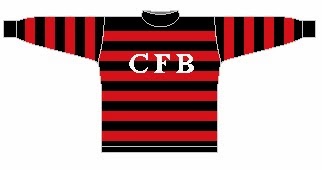
On February 18, 1897 Medicine Hat defeated Calgary 14-10 in the first match of the tournament. The following day Calgary walked over Regina 10-2, and unless the latter club managed a miracle against the hosts the Hatters would be champions. On February 20 Medicine Hat clinched the title with a 12-2 victory over the Capitals, becoming champions of the Northwest Territories.
Of the Hatters, only three players first played hockey in Medicine Hat as far as I can tell: forwards Jack Hargrave, Judd Bassett and Ben Niblock. Most of the team was actually made up of players from Rat Portage, Ontario who had competed against Manitoba intermediate clubs in 1895: goaltender George Delmage, forwards Tom Hardisty and Jack McMahon, and cover-point Don Hardisty, who had also previously played with the Winnipeg Vics junior side in 1892. Their other man was point Lorne McGibbon, who I believe was the same McGibbon who played junior hockey in Montreal in 1893.
Medicine Hat played its first competitive matches in 1896, when they defeated both Moose Jaw and Regina to show they were already the best team in Assiniboia. Of the 1897 championship squad, only Tom Hardisty, Hargrave, Bassett and McGibbon were on the original edition of the team. Presumably it was Hardisty's influence that brought his brother and the other ex-Thistles to Medicine Hat, making a good team that much better with some seasoned, effective players. An experienced team was a rare thing in the Northwest Territories in 1897, and it proved to be too much for the old-time Flames to handle.
As discussed last time, hockey was being played in what is now southern Saskatchewan (but was then the District of Assiniboia) by 1894, and in what is now southern Alberta (then the District of Alberta) in 1895. It was not long before inter-district hockey matches were played. In 1897 the unofficial championship of the Northwest Territories was decided by a tournament in Medicine Hat, in Assiniboia. Competing against the host Hatters were the Regina Capitals, also of Assiniboia, and the Calgary Fire Brigade of the District of Alberta.
The Calgary Fire Brigade was surely the favourite to win. I have record of five matches this team played in 1895 and 1896 against clubs from Edmonton and Fort Saskatchewan, and they won all five of them by a combined score of 21 to 1. Ironically, even though the modern Calgary Flames bear a nickname that was simply inherited from Atlanta where it actually made sense, for a city whose first notable hockey club was the Fire Brigade, the name is actually appropriate. Happy accident. Although the Fire Brigade had a brief history of success, Medicine Hat had the advantage of some relatively experienced players, who had played the game before it had been introduced to this part of the country.
On February 18, 1897 Medicine Hat defeated Calgary 14-10 in the first match of the tournament. The following day Calgary walked over Regina 10-2, and unless the latter club managed a miracle against the hosts the Hatters would be champions. On February 20 Medicine Hat clinched the title with a 12-2 victory over the Capitals, becoming champions of the Northwest Territories.
Of the Hatters, only three players first played hockey in Medicine Hat as far as I can tell: forwards Jack Hargrave, Judd Bassett and Ben Niblock. Most of the team was actually made up of players from Rat Portage, Ontario who had competed against Manitoba intermediate clubs in 1895: goaltender George Delmage, forwards Tom Hardisty and Jack McMahon, and cover-point Don Hardisty, who had also previously played with the Winnipeg Vics junior side in 1892. Their other man was point Lorne McGibbon, who I believe was the same McGibbon who played junior hockey in Montreal in 1893.
Medicine Hat played its first competitive matches in 1896, when they defeated both Moose Jaw and Regina to show they were already the best team in Assiniboia. Of the 1897 championship squad, only Tom Hardisty, Hargrave, Bassett and McGibbon were on the original edition of the team. Presumably it was Hardisty's influence that brought his brother and the other ex-Thistles to Medicine Hat, making a good team that much better with some seasoned, effective players. An experienced team was a rare thing in the Northwest Territories in 1897, and it proved to be too much for the old-time Flames to handle.
Subscribe to:
Posts (Atom)